How to Write a Construction Proposal That Wins Bids in 2026
Your construction proposal is the single document that determines whether you win or lose the job. Yet most contractors treat proposals as a chore — copying last month's template, plugging in rough numbers, and hoping for the best. In 2026's competitive market, that approach leaves money and projects on the table.
This guide shows you how to write proposals that win — with a structure that builds trust, numbers that hold up to scrutiny, and a presentation that sets you apart from the stack on the owner's desk.
The Anatomy of a Winning Construction Proposal
1. Executive Summary (1 Page)
Start with a concise overview that answers the owner's three questions:
- Who are you? Company background, relevant experience, team qualifications
- What will you deliver? Scope summary in plain language
- What does it cost? Total price with key assumptions
Keep it to one page. Owners read dozens of proposals — the ones that communicate clearly in the first 60 seconds get read in full.
2. Scope of Work (Detailed)
This is where most disputes originate. Be explicit about:
- What's included: Every trade, every system, every phase
- What's excluded: Owner-furnished items, permits you don't pull, utilities beyond the meter
- Allowances: Where quantities are estimated and may adjust
- Alternates: Value engineering options with clear cost deltas
3. Detailed Cost Breakdown
Owners increasingly demand transparent pricing. Present costs by:
- CSI division (for commercial) or phase (for residential)
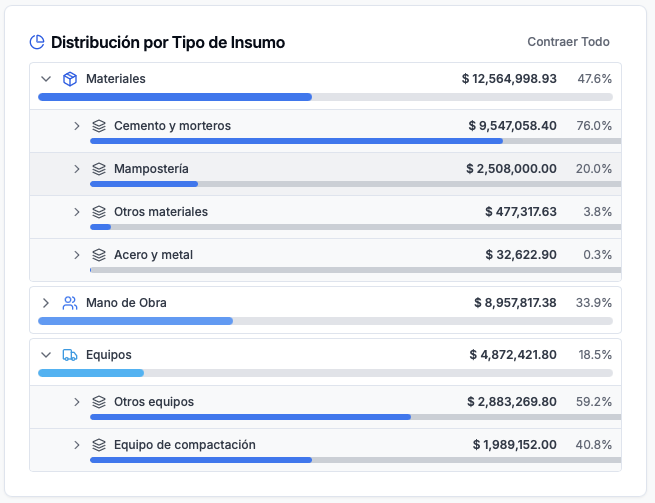
- Labor, material, equipment breakdowns where appropriate
- Markup structure: overhead and profit clearly stated
- Contingency: typically 5–10% for renovation, 3–5% for new construction
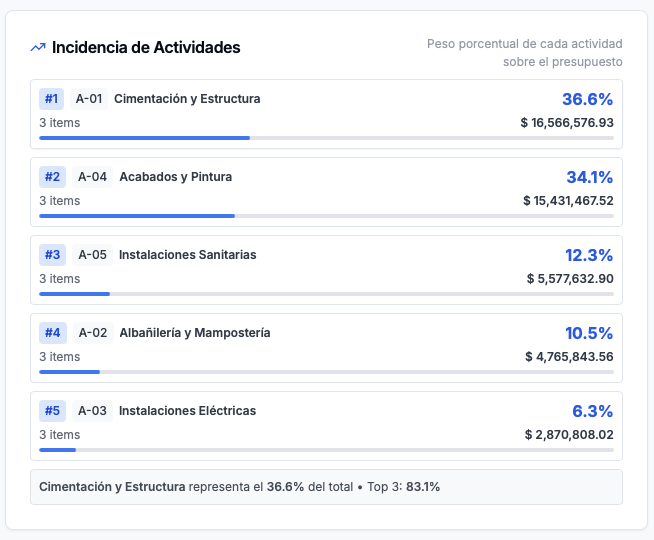
**This is where OneEstimate.ai transforms your proposals.** AI-powered takeoffs give you quantities that are 95–98% accurate, with localized labor and material pricing that reflects your actual market. When your numbers are tight, owners trust them — and you win more bids without leaving margin on the table.
4. Project Schedule
- Milestone schedule with key dates: mobilization, foundation, structure, dry-in, substantial completion
- Weather contingency built into the timeline
- Owner decision deadlines: when selections must be finalized
- Long-lead items: identify materials with 8+ week lead times
5. Qualifications & Experience
- 3–5 similar completed projects with photos, references, and final cost vs. budget
- Key personnel: project manager, superintendent, safety officer
- Safety record: EMR (Experience Modification Rate), OSHA recordable rates
- Bonding capacity and insurance certificates
6. Terms & Conditions
- Payment schedule: progress billing tied to milestones
- Change order process: clear, documented, with pricing mechanism
- Warranty: standard 1-year workmanship, manufacturer warranties passed through
- Dispute resolution: mediation before litigation saves everyone money
7 Proposal Mistakes That Lose Bids
Vague scope — "Electrical as per plans" means nothing. Detail the systems, panel sizes, and fixture counts.
Round-number pricing — $500,000 looks like a guess. $487,350 looks like you did the math.
Missing exclusions — If you don't explicitly exclude it, the owner assumes it's included.
Generic qualifications — Show projects like THIS project, not your entire portfolio.
No schedule — Owners care about time as much as money. Omitting a schedule is a red flag.
Boilerplate language — Tailor every proposal. Reference the owner's goals, site challenges, and design intent.
Sloppy presentation — Typos, inconsistent formatting, and poor-quality photos signal carelessness.
How OneEstimate.ai Powers Better Proposals
OneEstimate.ai doesn't write your proposals — it gives you the foundation that makes them unbeatable:
- Accurate quantities: AI takeoff eliminates the "rough guess" that inflates or undercuts your price
- Local pricing: 50-state cost database means your numbers reflect YOUR market, not a national average
- Speed: Produce detailed estimates in hours instead of days, so you can respond to more RFPs
- Consistency: Every estimate uses the same methodology, so your proposals build a track record of reliable pricing
- Professional output: Export detailed cost breakdowns that drop directly into your proposal template
Your proposal is only as good as your estimate. Try OneEstimate.ai free and build proposals that win on accuracy, not just price.
Frequently Asked Questions
How long should a construction proposal be?
For residential projects, 5–10 pages is typical. For commercial, 15–30 pages including detailed scope, cost breakdown, schedule, and qualifications. The key is completeness, not length — every page should add value. Owners prefer a thorough 20-page proposal over a vague 5-page letter.
Should I provide a detailed cost breakdown or a lump sum?
It depends on the project delivery method. Design-bid-build projects are typically lump sum. Negotiated, CM-at-risk, and design-build projects almost always require open-book cost breakdowns. Even for lump-sum bids, providing a voluntary breakdown builds trust and can differentiate your proposal.
How many bids should I submit per month?
Quality over quantity. Most successful contractors maintain a 20–30% win rate. If you're winning less than 15%, you're bidding too many projects you can't win. If you're above 40%, you may be leaving money on the table. OneEstimate.ai's speed lets you bid more selectively by producing estimates faster — so you can evaluate more opportunities and pursue only the best fits.
<!-- en-crosslinks-v1 -->
<hr/>
<h3>Related Estimating Guides</h3>
<ul>
<li><a href="/en/blog/best-construction-estimating-software-2026">Best Construction Estimating Software</a></li>
<li><a href="/en/blog/ai-construction-estimating-software-usa">AI Construction Estimating Software USA</a></li>
<li><a href="/en/blog/construction-cost-per-square-foot-guide-2026">Construction Cost Per Square Foot Guide</a></li>
<li><a href="/en/blog/estimating-software-masonry-contractors">Estimating Software Masonry Contractors</a></li>
</ul>
🚀 Try OneEstimate.ai for FREE
The AI construction estimating software that builds your material, labor and equipment breakdown automatically. Free plan to start — no credit card, no commitment.
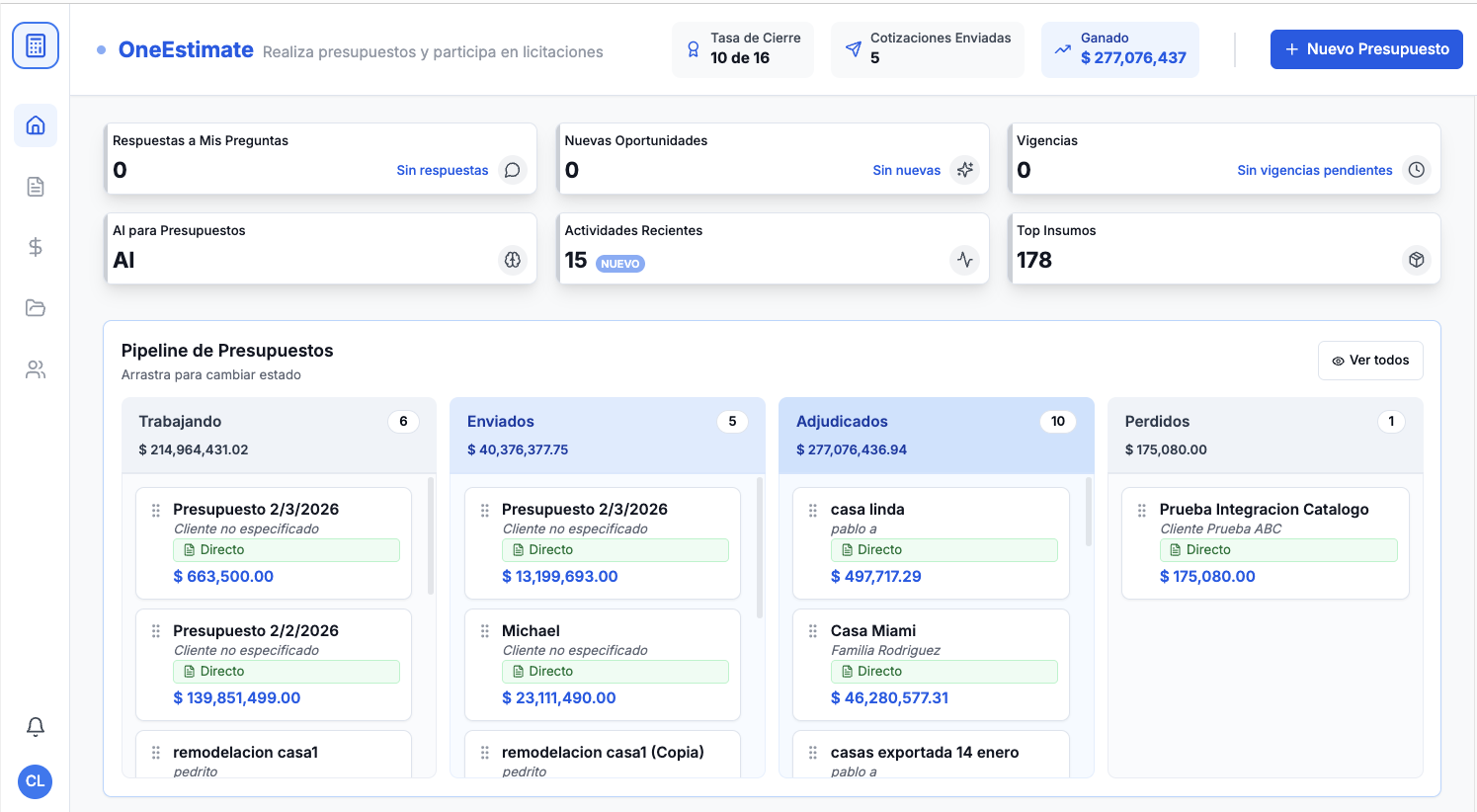
Product preview: OneEstimate.ai
Real screenshots of the market-leading AI estimating platform. Click any image to try OneEstimate.ai.